
01
Risk Assessment
We evaluate the exposure of your premises, identifying vulnerabilities related to access points, surveillance coverage, operational flow, asset protection, and environmental blind spots.
Premises Security Consultancy
We assess risk exposure, design structured protection frameworks, and implement integrated security infrastructure for commercial properties, warehouses, and modern business facilities.
Risk Assessment • Structured Design • Implementation Accountability
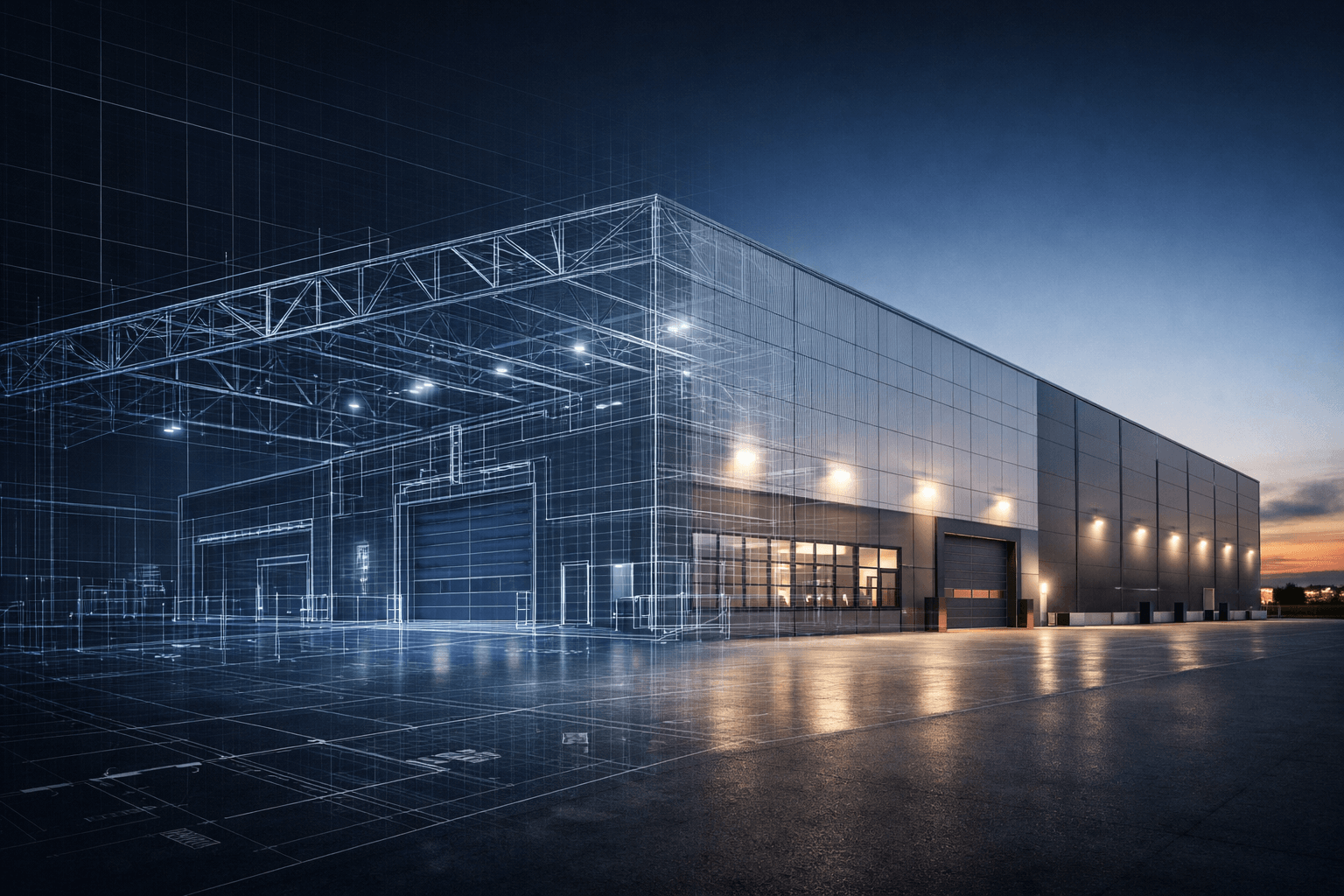
Many premises only address protection once operations have already begun, when vulnerabilities are already built into the environment.
When access control, surveillance, alarm response, and monitoring are handled separately, organisations are left with fragmented protection, reduced operational visibility, and infrastructure that struggles to support the way the premises actually functions.
Entry points remain loosely governed. Surveillance coverage is not always aligned with operational priorities. Alarm systems exist without clear oversight. In many cases, protective systems are added in pieces rather than designed as a coordinated framework.
The result is avoidable risk, inconsistent control, and security infrastructure that does not fully support business continuity. Security should not be added only after problems appear. It should be structured into the premises from the start.
At Transkonn, security is approached as operational infrastructure, not simply as a collection of devices. We begin with risk, structure the framework, then implement the design with direct accountability.
We evaluate the exposure of your premises, identifying vulnerabilities related to access points, surveillance coverage, operational flow, asset protection, and environmental blind spots.
Based on the assessment, we develop a coordinated protection framework that brings surveillance, alarm response, access management, and monitoring into one structured security environment.
Unlike advisory-only firms, we implement the systems we design. This ensures the original strategy is carried through into practical, operational infrastructure on site.
Understand the premises, its risks, and operational priorities.
Structure a coordinated protection framework around those realities.
Install and configure the systems required to support the design.
Ensure the environment remains controlled, visible, and manageable.
Effective protection requires coordination between systems. We design and implement security environments that operate under unified oversight rather than disconnected tools.
Structured monitoring of key areas across the premises to improve visibility, accountability, and incident review capability.
Controlled entry to sensitive spaces so the right people access the right areas at the right times without disrupting operational flow.
Immediate detection and alerting mechanisms designed to protect assets, vulnerable zones, and critical operational spaces.
Centralised oversight that gives operators a clearer view of activity, events, and protection status across the premises.
Our approach is particularly suited to environments where protection, control, and operational continuity are closely linked.
Facilities managing inventory, logistics operations, vehicle movement, loading areas, restricted storage, or high-value goods that require stronger visibility and control.
Commercial environments that require structured access, discreet monitoring, and a protection framework that supports professionalism and daily workflow.
Projects where security infrastructure can be designed into the premises before handover, reducing retrofitting friction and improving long-term coherence.
Organisations expanding their footprint and requiring a more deliberate, reliable, and scalable protection framework for their premises.
Our position is intentionally different from a typical equipment-first provider. We lead with assessment and structure, then carry responsibility through implementation.
We begin with understanding risk, movement, operations, and priorities before recommending any system design.
The same team that structures the security framework also implements it, reducing misalignment between planning and execution.
Our solutions are designed to support how the premises functions day to day, not simply to place equipment on site.
We structure infrastructure with durability, control, and future growth in mind so protection remains useful as the premises evolves.
Rather than asking, “What hardware should be installed?”, we begin with a more strategic question: “How should this premises be protected in a way that fits how it operates?” That shift leads to clearer recommendations, more cohesive systems, and stronger accountability from design through implementation.
The most effective security systems are not treated as last-minute additions. They are considered as part of the physical and operational environment from the outset.
By integrating security into the layout, flow, and practical operation of a premises, organisations gain stronger protection, clearer oversight, and infrastructure that supports the business rather than interrupting it.
This is especially valuable for new facilities, commercial developments, warehouse environments, and growing businesses that want more than isolated tools. Our role is to ensure security becomes a designed part of the premises environment, not an afterthought.
Protection systems align with actual movement, access, and operational priorities.
Security infrastructure is considered earlier, reducing costly and messy adjustments later.
Protection helps the premises function with more visibility, order, and confidence.
Systems are designed to work together rather than performing as isolated components.
To make the consultancy process tangible, we focus on practical outputs that help a business understand its exposure and move toward implementation with clarity.
Identification of key vulnerabilities across access, visibility, monitoring, and asset protection.
A structured view of what protective systems and controls are appropriate for the premises.
Guidance on how the required protection elements should work together under unified oversight.
A practical path from assessment to deployment so the project can move forward in an orderly way.
Businesses do not simply need equipment. They need clarity on where risk exists, what should be prioritised, and how protective systems should be structured in a way that makes operational sense. A formal review helps convert uncertainty into a practical, defendable security direction.
If you are establishing a new premises or evaluating the security of an existing facility, we can provide a structured assessment and recommendations aligned with your environment, operational priorities, and protection requirements.
Or contact us directly to discuss your premises, project stage, and operational requirements.